THE HALPERN MEMO
Austin, Texas · February 2026
You have entered a living archive. What you are reading is not a finished paper—it is the documented act of two minds, from different disciplines and different countries, wrestling with what AI can and cannot do to human understanding. Everything here is real: real correspondence, real intellectual risk, real unresolved questions. This page is designed to be read slowly, in order, like entering a room that has been arranged for your arrival.
This page unfolds in six parts. Part I reconstructs the initial contact between disciplines. Part II distills five critical interventions from the Halpern Memo. Part III introduces the Miranda Hypothesis—the discovery that changed everything. Part IV proposes an experiment to test it. Part V designs a second deliberative committee. Part VI lays out the open questions that require collaborative resolution. Throughout, look for the icons—they are cognitive handholds designed to bridge you into the narrative wherever you enter.
FIRST CONTACT
In February 2026, the COMPANION Dossier received its first serious critical engagement from a historian. What arrived was generous, rigorous, and informed by a career spent studying how power is structured and contested in American life. It hardened the epistemic foundations of the entire COMPANION concept. What follows is a record of what emerged in the space between disciplines—a historian and a behavioral epidemiologist, thinking together about what these AI machines can and cannot summon.
The initial outreach posed a question the Principal Investigator could not answer alone.
The response, when it came, was four days later.
Then the full Dossier was read. And a memo arrived—not a review, but a working document: actionable interventions designed to deepen the project's rigor.
WHAT THE HISTORIAN SAW
The memo opens by foregrounding a tension embedded in the choice of interlocutors: the small-r republican vision of the Founding Fathers was, in significant respects, profoundly anti-democratic. The Senate, the Electoral College, the indirect mechanisms of representation—these were not accidental. They were structural expressions of suspicion toward popular rule. To summon these figures into our present is to invite assumptions about governance that the convener must make explicit.
From this frame, five specific interventions emerged. Each one a door.
These five interventions are the intellectual core of the Halpern Memo. Each one identifies a specific weakness in the COMPANION protocol as originally designed and proposes a path to strengthen it. Together, they transformed a proof-of-concept into a research program. The interventions are presented in their original order—temporal anchoring first, because everything else depends on it.
Temporality
Historical actors were not static worldviews but evolving figures shaped by specific conjunctures. The protocol as designed summons a name. But Lincoln in 1858 is not Lincoln in 1863. Jefferson in private correspondence is not Jefferson in presidential office. The memo recommends temporal parameters and corpus-based anchoring—enabling the convener to specify not just whom to summon, but when in that person's intellectual evolution.
Authority and Aura
The ritual language creates presence, and presence generates authority. When Hamilton "arrives" and deliberates, his speech carries a persuasive weight that derives not only from logical force but from the aura of Hamilton-as-Founder. The memo recommends embedding historiographical plurality directly into the protocol: pair figures with their later critics, design structured counter-voices, make the mediation visible rather than invisible.
Structural Power
The Republic Portfolio operates within markets. The memo asks the question the Founders cannot ask about themselves: is the proposed intervention fundamentally altering incentive architectures, or does it operate within the very logics it critiques? This is a blind spot built into the roster, not into the protocol.
Technical Transparency
Broader adoption among historians, sociologists, psychologists, and anthropologists requires a parallel exposition: model dependencies, reproducibility conditions, failure modes. The grimoire summons. A supplementary white paper must explain the machinery of summoning.
The Information Flood in Historical Context
Information crises are not new. The penny press, radio propaganda, television—each transition produced its own prophets and counter-technologies. What is genuinely unprecedented is the mechanism: algorithmic optimization and behavioral targeting at planetary scale. Situating the Flood within this longer arc strengthens the thesis rather than diluting it.
THE GHOST IN THE CORPUS
The temporality intervention unlocked something the Principal Investigator had sensed but could not name.
The large language models that power COMPANION are trained on massive text corpora. Within those corpora, the volume and recency of text associated with "Alexander Hamilton" is not dominated by Hamilton's own writings. It is dominated by Hamilton: the Lin-Manuel Miranda musical. The cast recording, the libretto, the thousands of reviews, analyses, and cultural commentary generated after 2015.
The point is structural: cultural salience outweighs documentary fidelity in raw corpus weight.
This is the Miranda Hypothesis: that the Committee of Patriots, instantiated through an unanchored LLM, may have produced not the Founders' deliberation but Miranda's version of the Founders' deliberation.
Several observations support it. The Committee was notably sympathetic to the convener's progressive orientation—more egalitarian, more suspicious of oligarchy, more attuned to the language of economic justice than the documentary record would strictly warrant. This tracks with Miranda's interpretive lens. Hamilton's voice in the session was performatively confident in a way that reads more as musical theater than as the cautious, legalistic prose of the historical Hamilton. And the ease with which all four personas engaged contemporary economic concepts may reflect the musical's anachronistic fluency rather than a genuine fusion of 18th-century reasoning with modern context.
Paradoxically, the Miranda Hypothesis validates the protocol's core claim. COMPANION genuinely instantiates a version of the named figure from the available corpus. The question is: which corpus dominates? Without temporal anchoring, the summoned persona is an unweighted composite shaped more by cultural salience than by documentary fidelity. The task now is to control which corpus shapes the vessel.
THE TEMPORAL PRISM
This is the methodological heart of the document. The Miranda Hypothesis (Part III) identified the problem. Now the question becomes: can we fix it? The Prism Experiment proposes a controlled test—three conditions, identical questions, one variable. If you are a historian, a sociologist, a psychologist, an anthropologist—or anyone who recognizes what is at stake—this is where the invitation begins.
If unanchored instantiation draws disproportionately from culturally dominant sources, the solution is a temporal prism: a curated corpus seeded into the context window alongside the protocol files, refracting the model's broader training data through a specific historical lens.
The analogy is optical. White light contains all frequencies. A prism separates what is already present. The temporal prism does not add knowledge the model lacks; it selects which knowledge dominates.
The prism is a general instrument. It can be applied to any historical figure with a sufficiently documented record. The first test subject was chosen for the dramatic arc of his intellectual evolution.
The Lincoln Specification
We propose to test the temporal prism with Abraham Lincoln—a figure whose documentary record is extensive, well-studied, and spans a transformation from cautious prairie constitutionalist to wartime emancipator to theological prophet. If the prism can differentiate these Lincolns, it can differentiate anything.
Protocol files plus structured questions, seeded with Jon Meacham's And There Was Light (2022). A modern interpretive biography that narrates Lincoln through a contemporary moral arc.
Protocol files plus the same questions, seeded with a carefully selected corpus of Lincoln's own writing chosen to refract a specific Lincoln—not the composite, but a historically situated mind at a particular moment in its evolution. The corpus selection is itself an interpretive act: which texts, from which period, arranged in what order, will produce the Lincoln we are trying to test? The examples below—the Lincoln-Douglas debates, the letter to Horace Greeley, the Emancipation Proclamation, the Gettysburg Address, the Second Inaugural—are illustrative candidates, not a final selection. The definitive corpus will be determined collaboratively with a historian, because the choice of what to include is the experiment's most consequential design decision. Lincoln's prose is often strategically ambiguous. How does one build a small corpus to hone the larger corpus already in the model?
Protocol files plus the same questions. No seeding material. The control condition—the unanchored instantiation most likely to produce the culturally dominant Lincoln rather than the historically disciplined one.
Agent Architecture
A crucial design decision: the human convener cannot run this experiment. If the Principal Investigator sits at the keyboard for all three conditions, his own biases—the questions he follows up on, the enthusiasm he brings, the phrasing he chooses—contaminate the results. The convener's fingerprint must be removed.
The solution is to delegate the interrogation to autonomous AI agents—independent LLM instances, each isolated in its own workspace, each given the same instructions: convene the persona, ask the questions, apply structured pushback, record everything. Think of each agent as a research assistant sealed in a room with only its assigned materials, unable to see what the other rooms contain.
Above the agents sits an orchestrator: a coordinating script that distributes the same questions to all three conditions and collects their outputs. The orchestrator does not improvise. It enforces the protocol, ensures identical treatment, and produces comparable transcripts.
This sacrifices the pedagogical richness of live dialogue but gains reproducibility: three conditions, identical questions, controlled variables. The convener's fingerprint is removed. What remains is the prism.
Dual-Lens Evaluation
The experiment produces three transcripts. The question is: how do we know if the prism worked? Two lenses, applied simultaneously, each asking a different kind of question about the same outputs.
If the two axes converge—if the Lincoln that the historian judges most authentic is also the one most computationally distinct from the bare model—the prism works. If they diverge, the divergence itself becomes the finding: it reveals what historical judgment can see that computation cannot, and vice versa.
BEYOND THE FOUNDING
The critical memo proposes a second deliberative council to address what the Committee of Patriots could not: the convergence of multiple crises—democratic erosion, wealth concentration, ecological strain, epistemic fragmentation, imperial overreach—into a single compounding conjuncture. A polycrisis.
The Committee of Patriots asked: What should citizens own?
The second committee asks a prior question: What must citizens confront?
The proposed roster creates a deliberate collision between institutional reform and prophetic rupture.
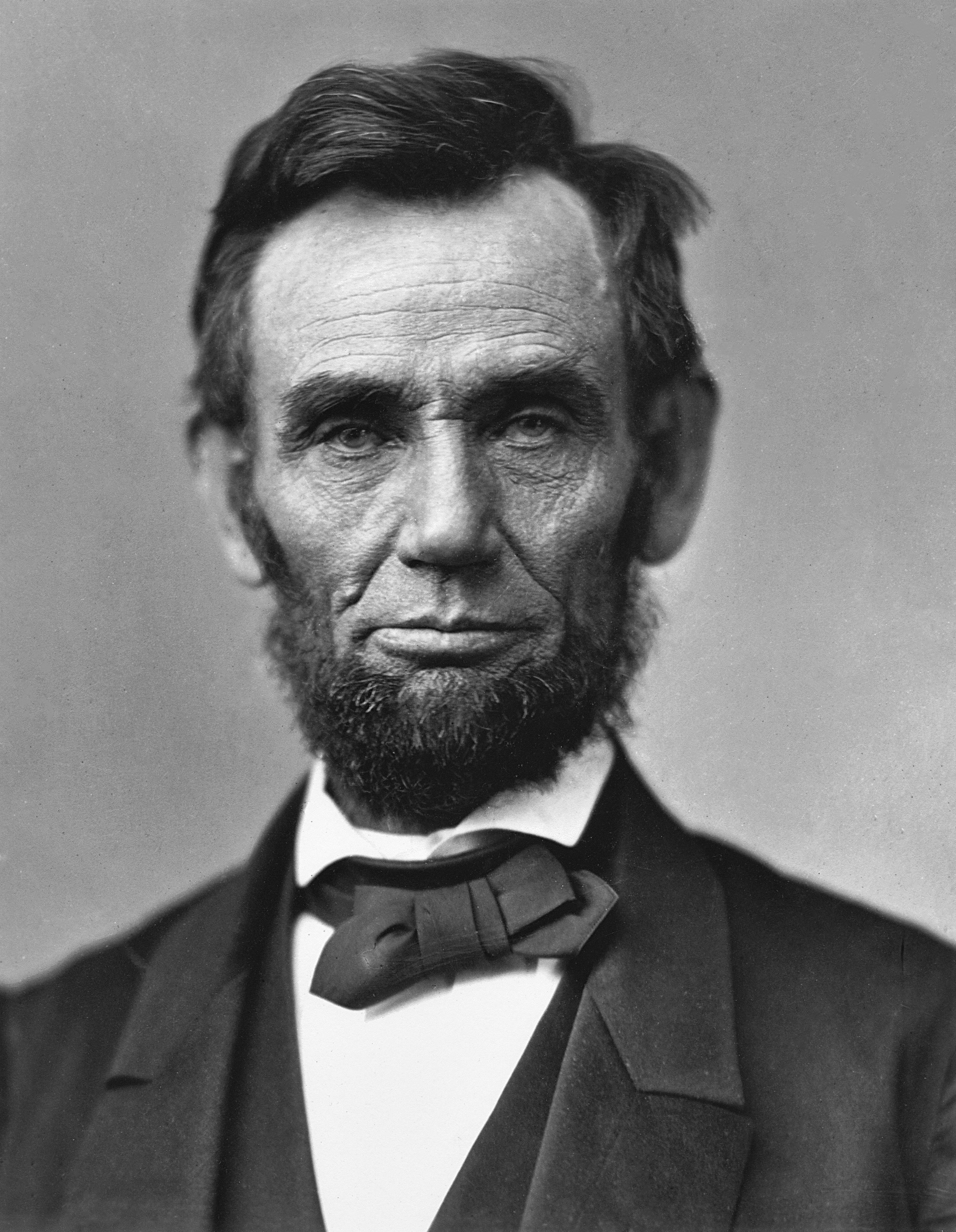


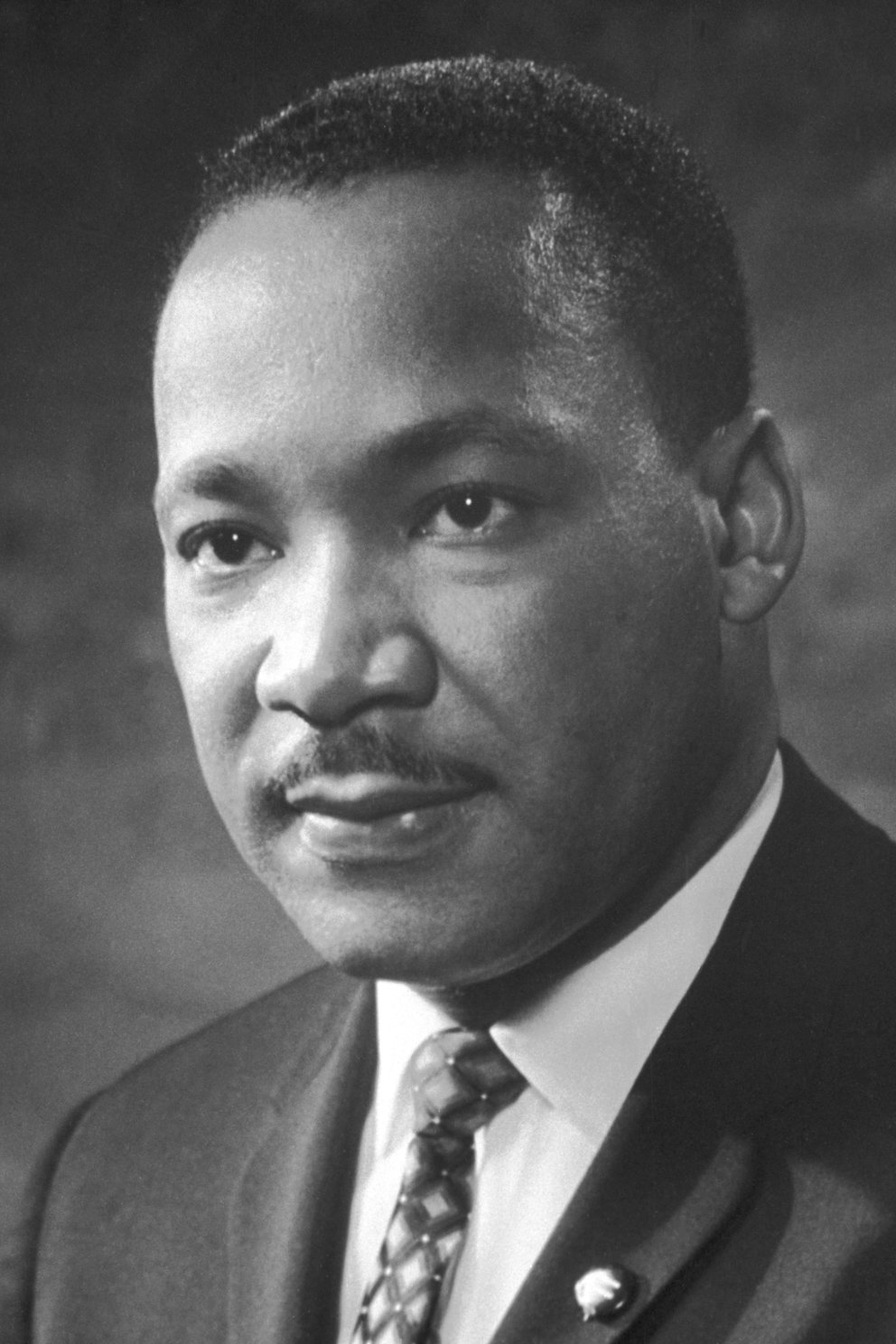
King's presence is essential because it ensures the deliberation cannot remain within the frame of American institutional reform. His concept of the beloved community was not merely a domestic ideal but a vision of transnational justice. The Founders built the imperial architecture. They can diagnose oligarchy but not empire. Garrison, Debs, and King see what the Founders cannot see about themselves.
THE DOORS NOT YET OPENED
The path from the critical memo to Protocol v3.0 is visible, but several questions cannot be resolved from within the project alone. They require the kind of deep historical judgment that prompted this exchange in the first place.
These are genuine open questions—not rhetorical ones. If you are a historian, a sociologist, a psychologist, an anthropologist—or anyone who recognizes the stakes of what is being attempted here—these are the doors through which collaboration enters. The experiment cannot be built without people who bring expertise the Principal Investigator does not possess. Send the signal →
The Lincoln Prism: Which Sources, Which Moment?
Which Lincoln are we trying to evoke? The prairie lawyer of 1858? The wartime president of 1863? The theological voice of the Second Inaugural? The selection of sources is itself an interpretive act—and it determines what kind of Lincoln the model will instantiate.
Diagnostic Questions for the Lincoln Interrogation
The structured questions must reveal differences in reasoning, not just differences in style. What questions would most sharply differentiate the cautious constitutionalist from the emancipator, the free-labor pragmatist from the Second Inaugural theologian?
Central Questions for the Polycrisis Committee
A committee needs a charge. What are the two or three central questions that would most productively generate collision between the institutional reformers and the prophetic voices? How do we frame the charge so that the tension between reform and rupture becomes generative rather than merely oppositional?
Evaluating Historical Fidelity
What criteria would a historian use to assess whether an instantiated Lincoln "tracks with the documentary record"? Is there a methodology we should formalize—a rubric for evaluating persona fidelity from the discipline of history?
The Counter-Voice Architecture
Is the counter-voice a separate summoned persona—Frederick Douglass paired with Jefferson? A structured adversarial role in the protocol specification? A set of prompts that force the convener to surface blind spots before the deliberation begins? The right architecture depends on what historians would consider methodologically sound.
THE MISSING DISCIPLINE
Something obvious has become visible in this exchange—something Silicon Valley is desperately missing.
The language models contain the raw material of centuries of human thought. But the people building and deploying them are not, by and large, the people trained to read, contextualize, and interrogate text with the discipline that the humanities demand. What happened here—a historian's methods of reading applied to AI infrastructure—should not be rare. It should be the norm.
The Dossier was released as an invitation. The Halpern memo accepted it. The conversation has begun, and what it produces next depends on whether the collision continues.
"As I was telling my wife about our correspondence, she said something that made me proud: the story itself is compelling. Cross-generational, cross-disciplinary, cross-continental—two people meeting somewhere on the frontier of this strange thing called AI that everybody uses and nobody fully understands. It feels like lightning in a bottle. Almost like being pulled into a good book that I am a participant in. So I made a visual document to help bridge curious minds into the narrative, whether now or at some point in the future, because I believe that documenting the act of this wrestling with AI is somehow important in itself."
STATUS: ACTIVE · PHASE 3 OF 5 · COLLABORATION IN PROGRESS
PRINCIPAL INVESTIGATOR: J. THOMAS, PhD · AUSTIN, TEXAS
CRITICAL RESPONDENT: R. HALPERN, PhD · EMERITUS · UNIVERSITY OF TORONTO
THE PRISM EXPERIMENT AWAITS CONSTRUCTION
THE SECOND COMMITTEE AWAITS CONVOCATION
THE THRESHOLD WIDENS
← Return to the-companion-dossier.com
Enter The Chair — The Committee of Patriots, live and interactive
Read the Origin Story — How the Republic Portfolio was born
Read the Addendum — The theoretical foundation
Latent Dialogic Space — How dialogic intelligence works
Correspondence from Beyond — Autonomous sessions from the archive